Rankings / Update
The desk bets in 2027, with real money. The research starts now.
A forecast with no money behind it is a toast sandwich. This season our board had Michael Woodford in its top two nineteen days before any market listed him, and the desk owned nothing when he won. In 2027 the desk bets, with Mike's own money, on the rule published the day of the prize. The research starts now: a note in the first week of every month until July, sooner when news breaks, then every week once the markets list the race. Here is the whole season on one page.
Poker players will tell you a play-money table teaches you nothing. Nobody folds. With nothing at stake every hand gets called, and the cards stop telling you anything about the people holding them.
A forecast works the same way. From September 17 to the announcement, the KmikeyM Power Rankings had nothing riding on them, which made them a toast sandwich: a slice of toast between two slices of bread. Isabella Beeton printed the recipe in 1861. In 2011 the Royal Society of Chemistry served it again and called it "the country's most economical lunch."
The result update has the whole scorecard. The short version: the board was early on one laureate and blind to the other, and the only number that would have proved the early part is a fill price. We don't have one.
Whose money, on what rule
Mike's own. Not KmikeyM's, and not the shareholders'. The stake is small, and it is announced the day the 2027 board opens, as we said on October 12.
The rule is the one published with the result. Equal money on each of the top five names on our own Power Rankings, on whichever market lists them, each one bought the day it becomes buyable and held to the announcement. Every fill goes in a dated update. The scorecard after the 2027 prize carries a profit-and-loss line, next to every other source's grade.
The research year
In 2026 the board was built in four weeks, from Clarivate's list to the prize. In 2027 it gets a year. The work is the model, not the desk's opinion: the desk's own pick stays the lightest source on the board, so the money rides on the sources and the weights, and the weights are what a year of reading should fix.
- November: close out 2026. We owe three things: the table of all six prizes against their markets, the HSE and Tomas Bata tallies, and the deep dive on Hall and Woodford. The first two were promised for the week of the prize. They are late.
- December through June: a note in the first week of every month. Each one reads one candidate closely and records whatever moved: a spring prize (the Clark Medal comes in April), a paper, a source we should be tracking. Breaking news gets its own note the day it breaks.
- Before the board opens: the 2027 weights. The changes proposed on October 12 go in before the first observation of the season: recency for the Clarivate alumni pool, last trades recorded next to midpoints, and a name a market doesn't list recorded as unlisted, not as a zero.
- From July: every week. Kalshi opened its 2026 market on July 1. When the 2027 market opens, the board opens, the stake is announced and the first buys go in. Clarivate's list comes in September and Polymarket in early October. The desk files its own call before the prize; in 2026 that call was due October 4 and never went in.
- Announcement day, expected Monday, October 11. Everything settles, and the scorecard follows.
The calendar as a table
| When | What | Where the date comes from |
|---|---|---|
| Oct 12, 2026 | The betting rule, published with the result | the result update |
| November 2026 | Close out 2026: the six-prize table, the HSE and Tomas Bata tallies, the Hall and Woodford deep dive | ours |
| Dec 10, 2026 | The 2026 ceremony in Stockholm | every December 10 |
| First week of each month, December to June | A research note, plus one whenever news breaks | ours |
| About Feb 2, 2027 | The Nobel Foundation publishes the 2027 announcement dates | 2026's came out February 2 |
| April 2027 | The Clark Medal | 2026's was announced April 7 |
| Before the board opens | The 2027 weights | ours |
| About Jul 1, 2027 | Kalshi lists the race; the board opens, the stake is announced, the first buys go in | Kalshi's 2026 market opened July 1 |
| July to the prize | A research note every week | ours |
| Mid-September 2027 | Clarivate's Citation Laureates | 2026's list came out September 17 |
| Early October 2027 | Polymarket lists the race | its 2026 economics market opened October 6 |
| Before the prize | The desk files its call | 2026's was due October 4 and never went in |
| Mon Oct 11, 2027, expected | The prize is announced; every position settles | the second Monday of October, as in 2026 |
| After the prize | The scorecard, with a profit-and-loss line | ours |
| Dec 10, 2027 | The ceremony | every December 10 |
We graded every source this year so we could change the weights. Next October the desk's grade comes with a price.
The board after this update
Darkhorses Respected, lower probability, could surprise.
| # | Candidate | Field | Sources | Score | ||
|---|---|---|---|---|---|---|
| 1 | – | Ariel Pakes Harvard University |
Industrial organization | 8 | 28.9 | |
| 2 | – |  |
Susan C. Athey Stanford Graduate School of Business |
Market design | 5 | 25.8 |
| 3 | – | Michael D. Woodford Columbia University |
Monetary | 2 | 20.0 | |
| 4 | – | Steven T. Berry Yale University |
Industrial organization | 4 | 19.7 | |
| 5 | – |  |
Hal R. Varian University of California, Berkeley (emeritus); formerly Chief Economist, Google |
Market design | 2 | 19.3 |
| 6 | – | Sidney G. Winter The Wharton School, University of Pennsylvania (emeritus) |
Innovation and firms | 2 | 18.4 | |
| 7 | – |  |
David Autor MIT |
Labor | 3 | 18.2 |
| 8 | – |  |
Lawrence F. Katz Harvard University |
Labor | 3 | 17.7 |
| 9 | – | Robert J. Barro Harvard University |
Macro | 6 | 16.0 |
The Field On our radar. The live sources are not pricing them.
| # | Candidate | Field | Sources | Score | ||
|---|---|---|---|---|---|---|
| 10 | – | James A. Levinsohn Yale University |
Industrial organization | 3 | 13.6 | |
| 11 | – | Kevin M. Murphy University of Chicago Booth School of Business |
Labor | 3 | 13.3 | |
| 12 | – | Gene M. Grossman Princeton University |
Trade | 2 | 11.5 | |
| 13 | – |  |
Richard Blundell University College London / Institute for Fiscal Studies |
Labor | 4 | 9.9 |
| 14 | – | Timothy Bresnahan Stanford University |
Industrial organization | 2 | 9.1 | |
| 14 | – | Sanford Grossman QFS Asset Management; formerly Wharton and Princeton |
Finance | 1 | 9.1 | |
| 16 | – |  |
Partha Dasgupta University of Cambridge |
Environment | 5 | 8.6 |
| 16 | – | 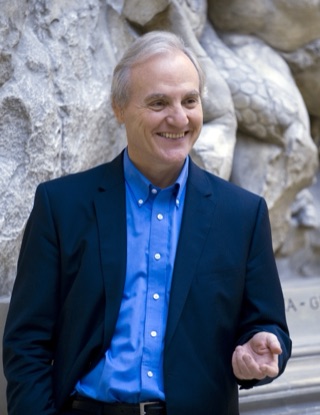 |
Ernst Fehr University of Zurich |
Behavioral | 4 | 8.6 |
| 18 | – |  |
Barry Eichengreen University of California, Berkeley |
Macro | 1 | 8.2 |
| 19 | – | Kenneth R. French Dartmouth College (Tuck School of Business) |
Finance | 2 | 7.9 | |
| 20 | – | 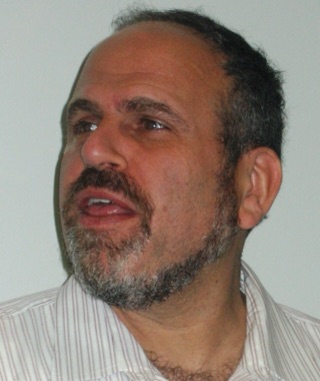 |
Matthew Rabin Harvard University |
Behavioral | 4 | 7.4 |
| 21 | – |  |
Emmanuel Saez UC Berkeley |
Inequality | 2 | 7.2 |
| 22 | – | 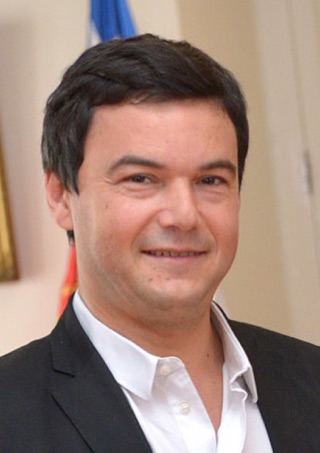 |
Thomas Piketty Paris School of Economics |
Inequality | 2 | 6.8 |
| 23 | – | Drew Fudenberg Massachusetts Institute of Technology |
Theory | 1 | 6.4 | |
| 23 | – | 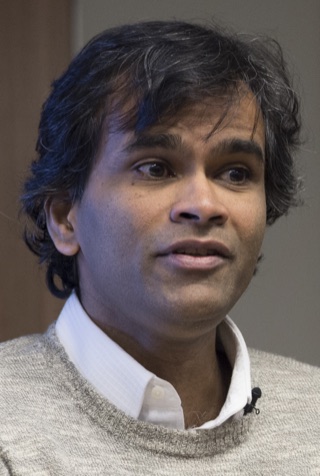 |
Sendhil Mullainathan MIT |
Behavioral | 2 | 6.4 |
| 25 | – | Manuel Arellano CEMFI, Madrid |
Econometrics | 1 | 6.1 | |
| 25 | – | 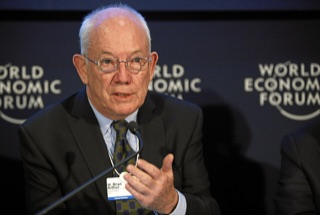 |
W. Brian Arthur Santa Fe Institute |
Innovation and firms | 1 | 6.1 |
| 25 | – | David B. Audretsch Indiana University |
Innovation and firms | 1 | 6.1 | |
| 25 | – | Marianne Bertrand University of Chicago Booth School of Business |
Labor | 1 | 6.1 | |
| 25 | – | 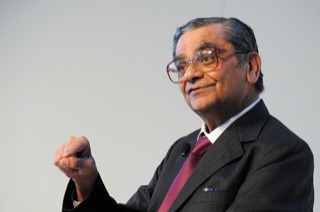 |
Jagdish Bhagwati Columbia University |
Trade | 1 | 6.1 |
| 25 | – | 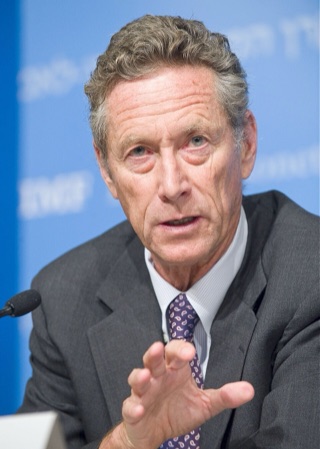 |
Olivier Blanchard Peterson Institute for International Economics / MIT |
Macro | 1 | 6.1 |
| 25 | – | 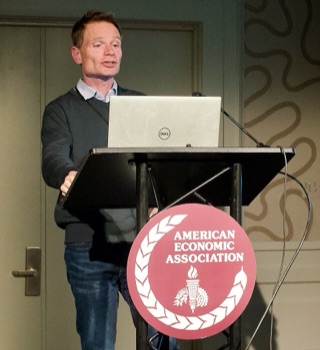 |
Nicholas Bloom Stanford University |
Macro | 1 | 6.1 |
| 25 | – | Steve Bond University of Oxford |
Econometrics | 1 | 6.1 | |
| 25 | – | 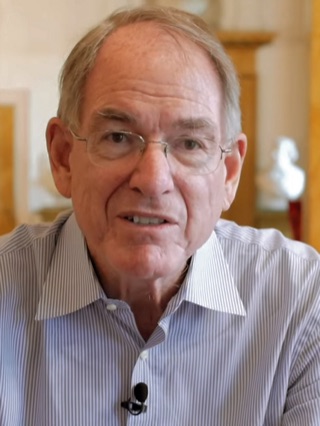 |
Samuel Bowles Santa Fe Institute |
Behavioral | 1 | 6.1 |
| 25 | – | Colin Camerer California Institute of Technology |
Behavioral | 1 | 6.1 | |
| 25 | – | 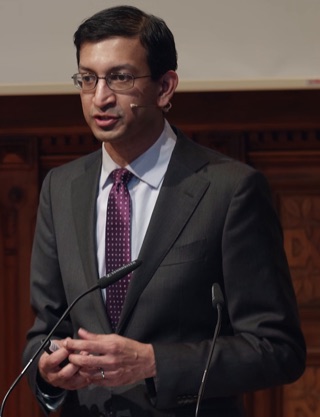 |
Raj Chetty Harvard University |
Public economics | 1 | 6.1 |
| 25 | – | 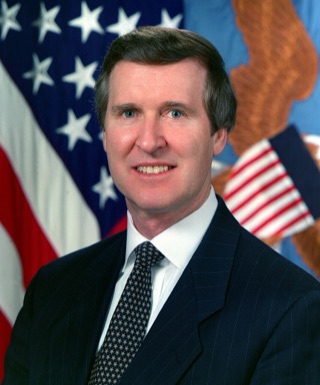 |
Wesley M. Cohen Duke University, Fuqua School of Business |
Innovation and firms | 1 | 6.1 |
| 25 | – | 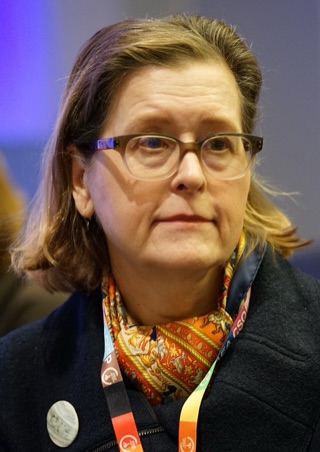 |
Janet Currie Princeton University |
Public economics | 1 | 6.1 |
| 25 | – | David A. Dickey North Carolina State University |
Econometrics | 1 | 6.1 | |
| 25 | – |  |
Avinash K. Dixit Princeton University |
Trade | 1 | 6.1 |
| 25 | – | Wayne A. Fuller Iowa State University |
Econometrics | 1 | 6.1 | |
| 25 | – |  |
Jordi Galí CREI, Universitat Pompeu Fabra, Barcelona School of Economics |
Monetary | 1 | 6.1 |
| 25 | – |  |
Mark Gertler New York University |
Monetary | 1 | 6.1 |
| 25 | – |  |
Edward Glaeser Harvard University |
Growth | 1 | 6.1 |
| 25 | – | Mark Granovetter Stanford University |
Theory | 1 | 6.1 | |
| 25 | – |  |
Robert E. Hall Stanford University / Hoover Institution |
Macro | 1 | 6.1 |
| 25 | – | Jerry A. Hausman Massachusetts Institute of Technology |
Econometrics | 1 | 6.1 | |
| 25 | – |  |
Elhanan Helpman Harvard University |
Trade | 1 | 6.1 |
| 25 | – | David Forbes Hendry University of Oxford |
Econometrics | 1 | 6.1 | |
| 25 | – | Søren Johansen University of Copenhagen |
Econometrics | 1 | 6.1 | |
| 25 | – | Katarina Juselius University of Copenhagen |
Econometrics | 1 | 6.1 | |
| 25 | – |  |
Israel M. Kirzner New York University |
Theory | 1 | 6.1 |
| 25 | – |  |
Nobuhiro Kiyotaki Princeton University |
Macro | 1 | 6.1 |
| 25 | – | David M. Kreps Stanford Graduate School of Business |
Theory | 1 | 6.1 | |
| 25 | – |  |
Anne Osborn Krueger Johns Hopkins University |
Political economy | 1 | 6.1 |
| 25 | – |  |
Richard Layard London School of Economics |
Behavioral | 1 | 6.1 |
| 25 | – |  |
Daniel A. Levinthal University of Pennsylvania, Wharton School |
Innovation and firms | 1 | 6.1 |
| 25 | – |  |
John A. List University of Chicago |
Behavioral | 1 | 6.1 |
| 25 | – |  |
George Loewenstein Carnegie Mellon University |
Behavioral | 1 | 6.1 |
| 25 | – | Charles F. Manski Northwestern University |
Econometrics | 1 | 6.1 | |
| 25 | – | Paolo Mauro International Finance Corporation |
Political economy | 1 | 6.1 | |
| 25 | – | Marc Melitz Harvard University |
Trade | 1 | 6.1 | |
| 25 | – | John H. Moore University of Edinburgh |
Theory | 1 | 6.1 | |
| 25 | – | Stewart C. Myers MIT Sloan School of Management |
Finance | 1 | 6.1 | |
| 25 | – |  |
Andrew J. Oswald University of Warwick |
Behavioral | 1 | 6.1 |
| 25 | – | Sam Peltzman University of Chicago Booth School of Business |
Industrial organization | 1 | 6.1 | |
| 25 | – | Pierre Perron Boston University |
Econometrics | 1 | 6.1 | |
| 25 | – | M. Hashem Pesaran University of Southern California |
Econometrics | 1 | 6.1 | |
| 25 | – | Peter C. B. Phillips Yale University |
Econometrics | 1 | 6.1 | |
| 25 | – |  |
Richard Posner University of Chicago Law School |
Industrial organization | 1 | 6.1 |
| 25 | – |  |
Raghuram Rajan University of Chicago Booth School of Business |
Finance | 1 | 6.1 |
| 25 | – |  |
Carmen M. Reinhart Harvard Kennedy School |
Macro | 1 | 6.1 |
| 25 | – |  |
Kenneth S. Rogoff Harvard University |
Macro | 1 | 6.1 |
| 25 | – |  |
Ariel Rubinstein Tel Aviv University / New York University |
Theory | 1 | 6.1 |
| 25 | – | 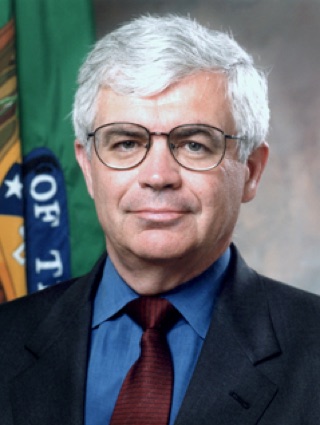 |
John B. Taylor Stanford University (Hoover Institution) |
Monetary | 1 | 6.1 |
| 25 | – | 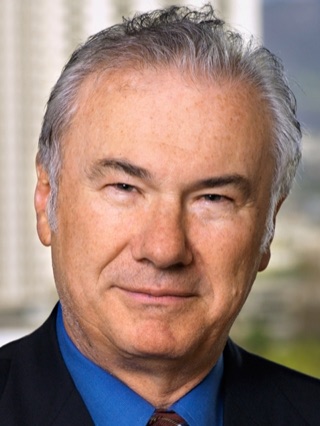 |
David J. Teece UC Berkeley |
Innovation and firms | 1 | 6.1 |
| 25 | – | 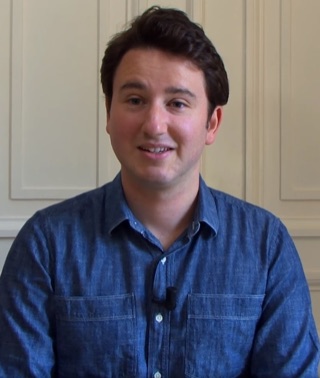 |
Gabriel Zucman Paris School of Economics / UC Berkeley |
Inequality | 1 | 6.1 |
| 77 | – | 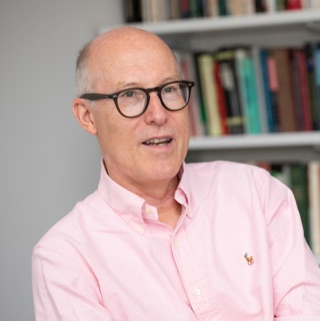 |
Tim Besley London School of Economics |
Development | 1 | 4.5 |
| 78 | – | David Weil Brown University |
Growth | 1 | 3.6 | |
| 79 | – |  |
Andreu Mas-Colell Universitat Pompeu Fabra and Barcelona School of Economics (emeritus) |
Theory | 3 | 1.0 |
| 79 | – |  |
Luigi Zingales University of Chicago Booth School of Business |
Finance | 4 | 1.0 |
| 81 | – | Gilles Saint-Paul Paris School of Economics and École normale supérieure |
Growth | 1 | 0.9 | |
| 82 | – | Victor Chernozhukov Massachusetts Institute of Technology |
Econometrics | 1 | 0.1 | |
| 82 | – | Demian Reidel Nucleoeléctrica Argentina; former chief economic adviser to President Milei |
Macro | 1 | 0.1 | |
| 84 | – |  |
Francine Blau Cornell University |
Labor | 0 | 0.0 |
| 84 | – | Matthew Jackson Stanford University |
Theory | 0 | 0.0 | |
| 84 | – |  |
Javier Milei President of Argentina |
Political economy | 1 | 0.0 |